

Visual abstract
How to Cite
Cited by


Abstract
The COVID-19 pandemic has negatively affected physical and mental well-being, reducing the quality of life of both pediatric patients and their families.
Objective: To evaluate acute and post-infection COVID-19 symptoms in children and assess their impact on the quality of life of patients and their parents.
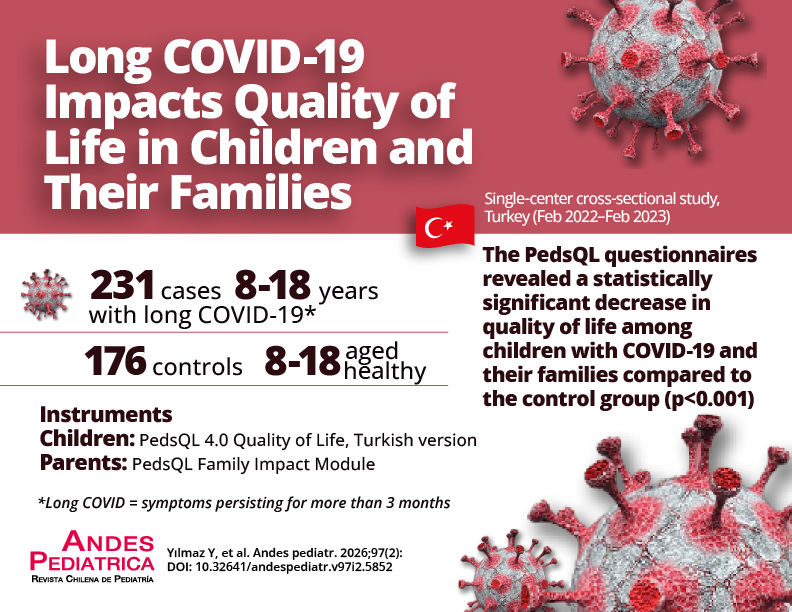
Patients and Method: Cross-sectional study. 231 children aged 8–18 years diagnosed with long COVID-19 and their parents were included. Long COVID-19 was defined as the persistence of symptoms 3 months after the acute episode. A control group of 176 healthy children, matched for age and sex, and their parents, was also included. Demographic data and symptoms during infection and three months post-infection were recorded. Children completed the Pediatric Quality of Life Inventory (PedsQL™ 4.0, Turkish version), while parents completed the PedsQL™ Family Impact Module.
Results: Fatigue (49.3%) was the most common symptom during the acute phase, followed by sore throat (39.8%), headache (39.3%), cough (27.7%), and joint pain (26.4%). 76.2% of children reported persistent symptoms, the most common being fatigue (15.9%), cough (15.3%), cognitive dysfunction (15.3%), headache (10.2%), and anosmia/ageusia (9%). According to the PedsQL™ questionnaires, children with COVID-19 and their parents showed significantly lower quality of life scores compared to controls (p < 0.001).
Conclusion: COVID-19 infection negatively impacts the quality of life of both pediatric patients and their families, especially due to persistent symptoms such as attention deficit and poor academic performance. Comprehensive physical and psychological follow-up during and after the pandemic is recommended.

This work is licensed under a Creative Commons Attribution 4.0 International License.
Copyright (c) 2026 Yasin Yılmaz, Damla Geckalan, Veysel Nijat Baş