

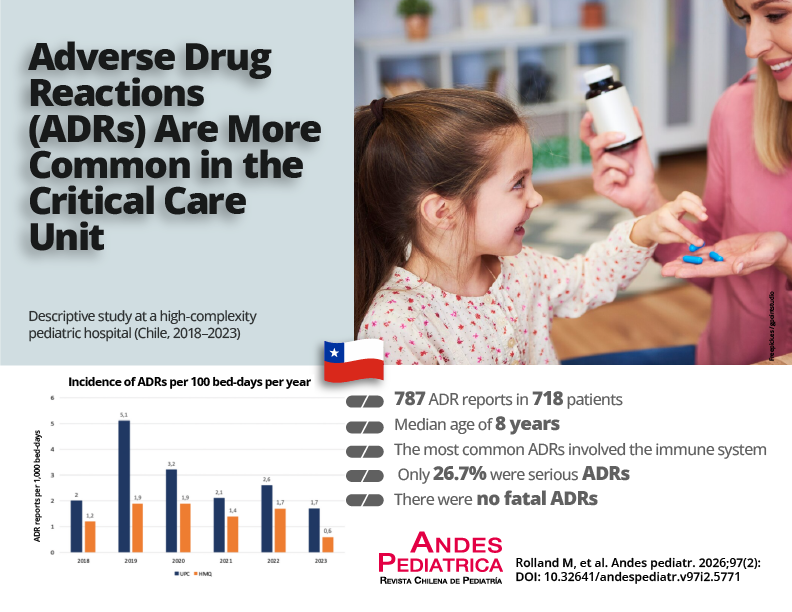
Visual abstract
How to Cite
Cited by


Abstract
Adverse drug reactions (ADRs) are a significant cause of morbidity and mortality in the pediatric population, particularly due to the frequent use of medications in off-label indications.
Objective: To characterize the epidemiology of ADRs in a high-complexity pediatric hospital.
Patients and Method: A descriptive, observational, and retrospective cohort study was conducted at the Hospital Dr. Exequiel González Cortés (HEGC) between 2018 and 2023. HEGC is a high-complexity, teaching, and self-managed pediatric hospital, and is one of the seven hospitals of the Southern Metropolitan Health Service. It has 168 beds and provides coverage to an estimated pediatric population of 254,000 children. Hospitalized and outpatient patients with reported ADRs were included. Demographic variables, involved drugs, causality (Naranjo algorithm), severity (WHO criteria), and affected physiological systems were analyzed.
Results: A total of 787 ADR reports were recorded in 718 patients, with a median age of 8 years. The highest incidence occurred in the Critical Care Unit. The main therapeutic groups involved were antibacterials (18.6%), antineoplastics (18.4%), and psycholeptics (9.7%). The most affected systems were the immune system (35.7%), nervous system (15%), and digestive system (7%). Regarding severity, 63.5% of ADRs were moderate, 26.7% were severe, with no fatal events reported.
Conclusion: This study shows that ADRs are frequent in pediatric patients, with a higher incidence in the critical care setting. It highlights the need for improving ADR reporting and developing pharmacovigilance strategies to optimize the safety of drug prescribing in pediatrics.

This work is licensed under a Creative Commons Attribution 4.0 International License.
Copyright (c) 2026 Maximiliano Rolland, Rubén Hernández, Paulina Canales, Javiera Gutiérrez